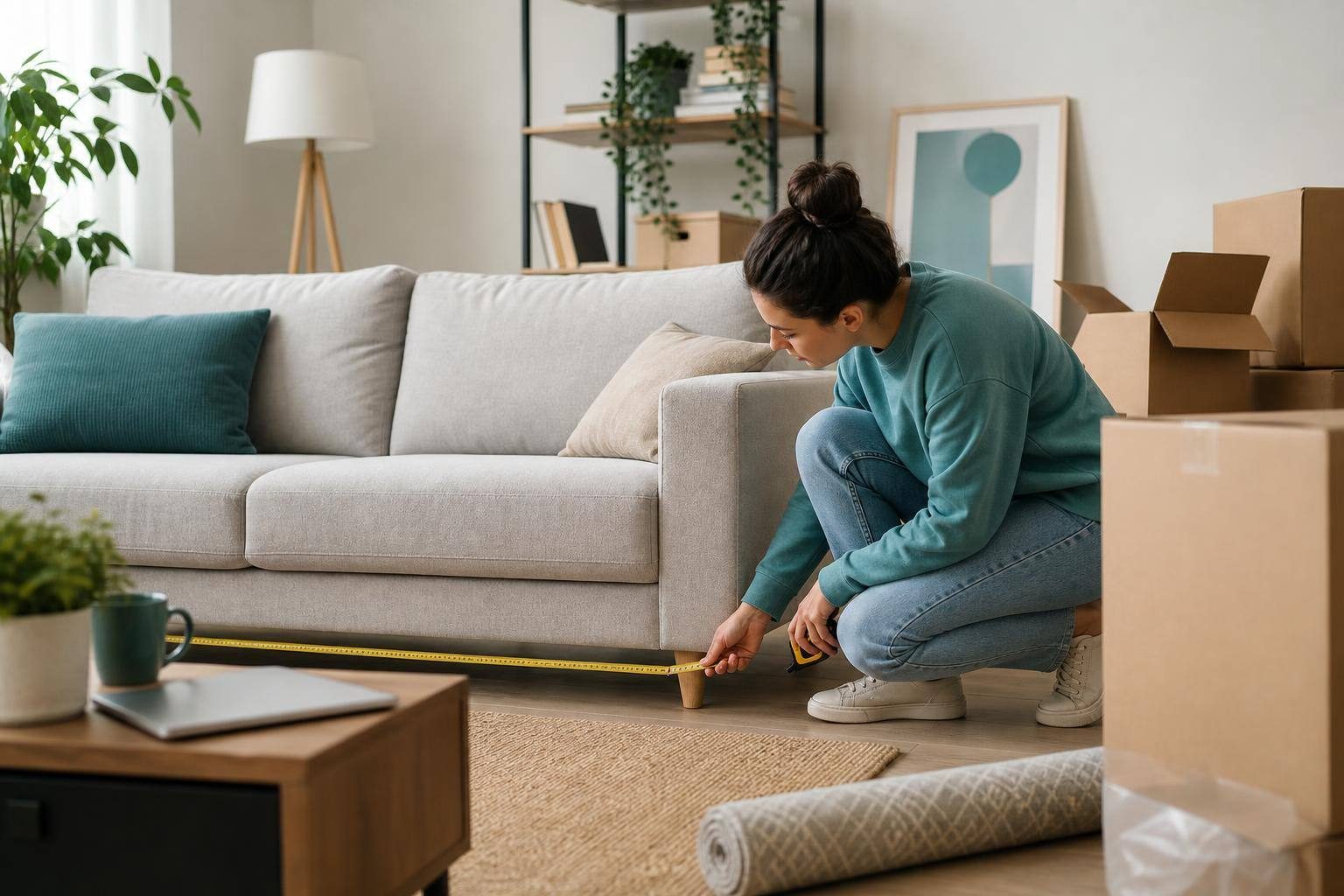
Distinguish Product Size From Delivery Size
The first step is to find the official specifications for the exact model and separate the details that are often combined or listed in different sections. The dimensions of the assembled product—width, depth, and height—show the space it will occupy once installed. However, they are not enough on their own to determine whether the order can get into your home.
Also check the dimensions and weight of every package. A single item may be shipped in several boxes, and each may have different length, width, height, and weight. A flat-pack piece of furniture may take up a reasonable amount of space once assembled but arrive in a long, wide, or difficult-to-handle package.
Also consult the assembly instructions, manual, and technical documentation. These documents may identify protruding parts, the orientation required to install the product, or requirements that are not obvious in photos. If a crucial measurement is missing, do not infer it from images or similar items: ask the manufacturer or seller for the specification before ordering.
- Write down the dimensions of the assembled product separately from those of each box.
- Use the same unit in all your notes, whether centimeters or inches.
- Make sure the details apply exactly to the version you intend to buy.
Measure the Actual Space and the Room Needed to Use It
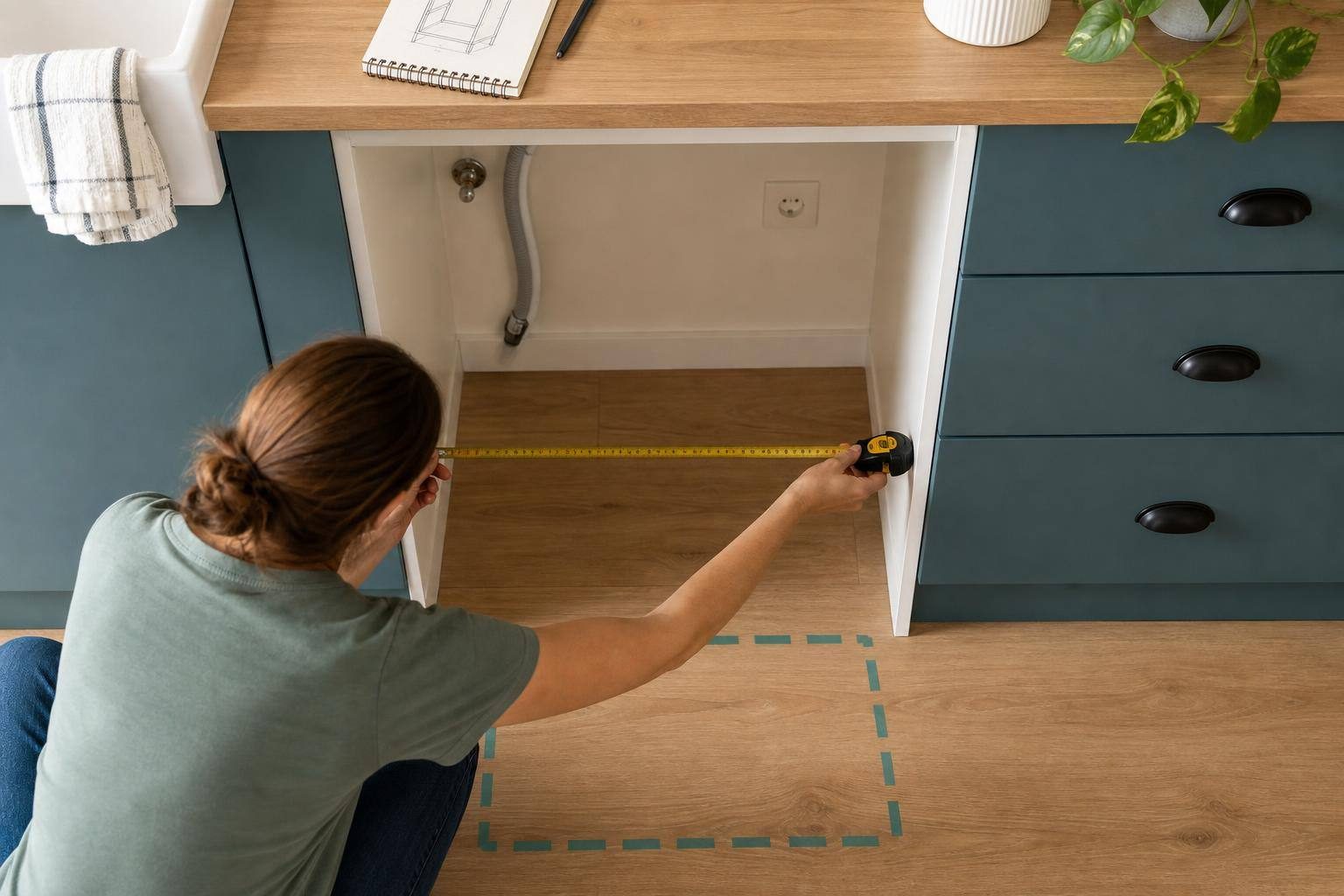
Measure the place where the product will go with a tape measure: width, depth, and height. For fitted furniture or appliances, use the narrowest point of the space. Cabinets, baseboards, molding, nonparallel walls, or uneven floors can reduce the usable opening compared with a measurement taken in a wider area.
Do not measure only the main body. Include legs, handles, hinges, cables, plugs, and anything else that protrudes. Also account for wall projections, baseboards, and any clearance required for ventilation, connections, or safety as specified by the manufacturer.
An item fitting when closed does not mean it can be used comfortably. Check how much space doors, drawers, lids, or trays take up when fully open. A simple way to visualize this is to draw the space as viewed from above: mark the rectangle of the closed product and, around it, the area occupied by its moving parts.
- Measure the narrowest point, not just the easiest one to reach.
- If possible, mark the product's approximate footprint on the floor.
- Allow for opening space before deciding that the item fits.
Check the Entire Route From Delivery to the Room
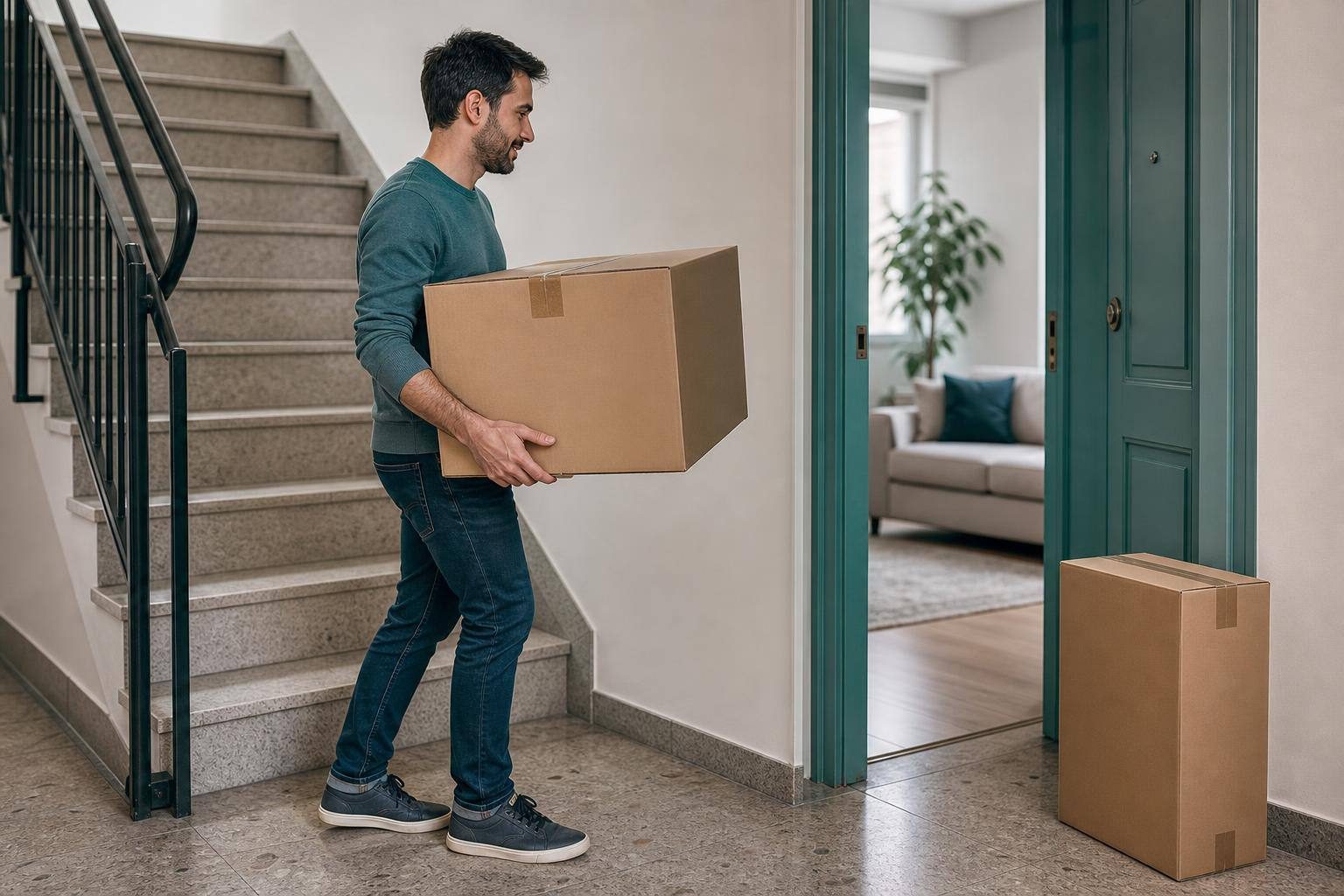
The check does not end in the final room. Map out the route the order will have to take from the unloading point: building entrance, elevator, hallways, doors, stairs, landings, and turns. Measure every narrow section, paying particular attention to door widths from frame to frame and the clear height of passageways.
For this part of the review, compare the route measurements with the outside dimensions of the package, not only with the assembled product. A box may not fit through a door or may make a turn on a landing impossible, even if the assembled item fits in the room.
Avoid relying on an exact match between a box and an opening. Delivery requires enough clearance to hold, tilt, and turn the package safely. If the route includes tight turns or steps, maneuvering clearance is especially important.
- Make an ordered list of every stage of the delivery route.
- Measure doors, the elevator, and landings before buying, not when the order arrives.
- Identify the most difficult point along the route and compare it with the largest box.
Assess the Weight You Will Need to Move and the Support Required
The total weight is useful, but it is not enough. Check the weight of each box and identify the heaviest one. This information helps you plan how it will be moved from the entrance to the assembly area, whether there are stairs, and whether you will need help receiving and carrying it.
It is useful to distinguish among three figures. Product weight helps assess what the floor, wall, or structure will need to support. Package weight affects delivery, elevator use, stairs, and handling during assembly. Load capacity, when stated by the manufacturer, indicates how much can be placed on or inside the product; it should be checked for that specific model, not estimated from its appearance or material.
Packaging dimensions matter even when the item does not seem heavy. In logistics, dimensional weight, which is related to box volume, may be considered. To determine whether an order can pass through your home, the essential point is to treat the packaging as the actual object that will need to pass through doors, hallways, and turns.
- Before ordering, decide who will handle the heaviest box and which route they will take.
- Do not infer load capacity: use only the figure stated for the model.
- Check the seller's or carrier's current terms if you need to know shipping details.
Final Checklist Before Paying
Before completing the purchase, confirm that you have the assembled dimensions of the item and the measurements and weight of every package. Check the space at its narrowest point, along with projections and the space needed to open, ventilate, connect, and use the product.
Then review the entire delivery route, including access points, doors, elevator, hallways, stairs, and turns. Read the manual or installation documentation for the exact model, and determine how you will move the heaviest package to the assembly area.
General guides are useful for planning, but required clearances, connections, structural capacity, and installation requirements depend on each product. When a measurement is critical and has not been published, request the information before placing the order.
- Assembled product: width, depth, and height confirmed.
- Packages: number of boxes, dimensions, and weight checked.
- Route, space for use, and handling plan verified.