
An offer is more than just the product
On a marketplace, one product listing may include several offers for the same item. Although the photo, title, and specifications may appear identical, the purchase terms can vary from one option to another. For this reason, you should not decide based only on the first price shown: review the specific offer, including who sells it, who ships it, the product’s condition, when it is expected to arrive, and which return policy applies.
The first step is to find two details that may appear separately: “Sold by” and “Shipped from,” or their equivalents. The seller is the party marketing the item. The shipping party is responsible for preparing and dispatching the order. In some offers, both roles belong to the same retailer; in others, an external seller markets the product while the platform handles order fulfillment. A platform shipping an item does not, by itself, mean that it is the seller.
This distinction also helps clarify who may be responsible for certain questions. When a platform manages the storage, picking, packing, and shipping of a marketplace product, the seller may still be responsible for matters such as product information, technical support, or the warranty, depending on the terms shown. Before buying, always check the details listed specifically for that offer.
- Do not assume that the preselected offer is the most suitable one for you.
- Look for fields equivalent to seller and shipping on both the website and app; their names may vary by country or platform.
- Assess the price together with delivery, condition, and returns, rather than in isolation.
Open the other offers and review the seller’s profile
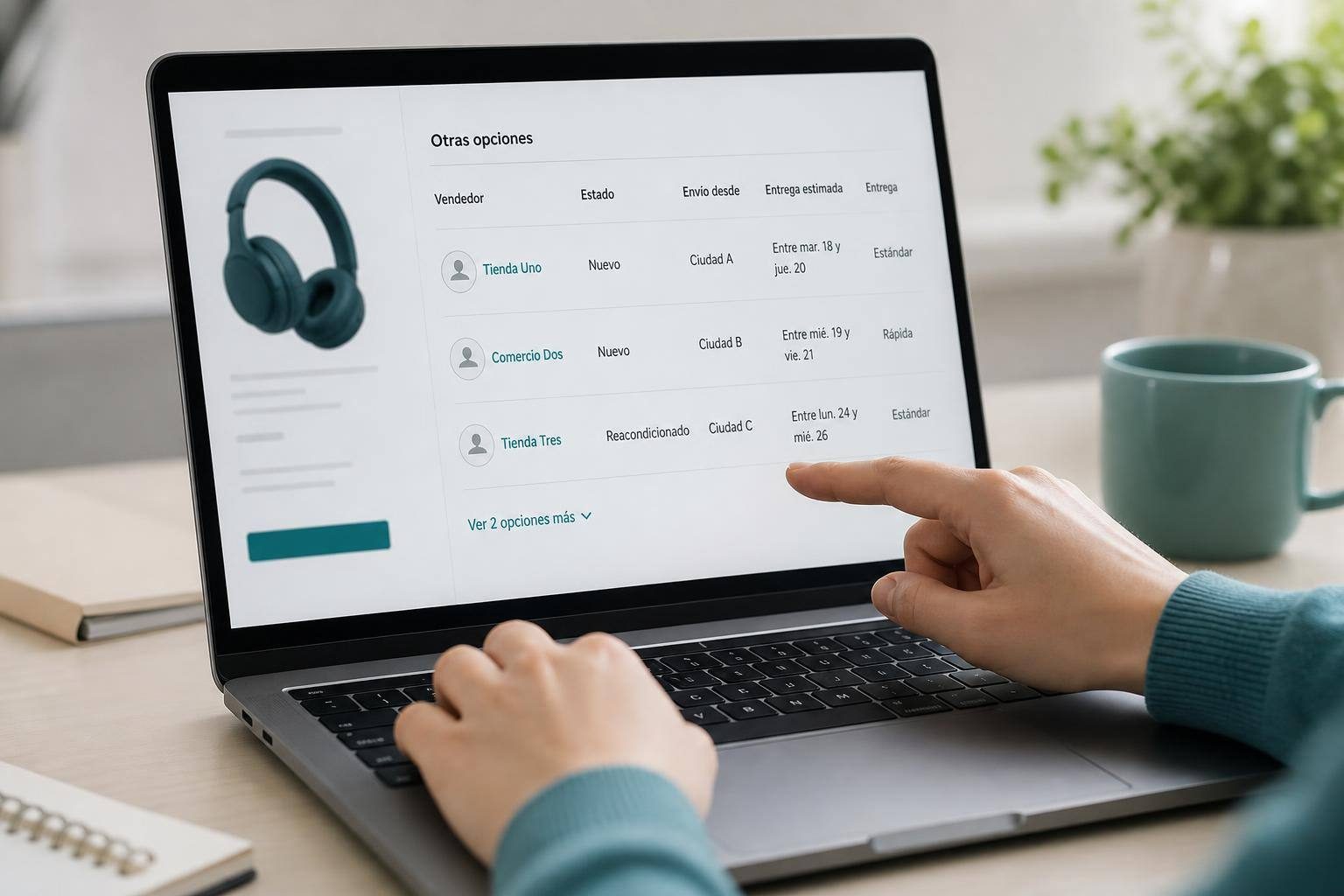
Even if an initial offer seems convenient, open the “other sellers,” “more options,” or “offers” section, if available. This list lets you compare the terms of each alternative rather than assuming they are all identical. Check whether the item is new or has another stated condition, who sells it, who ships it, and which delivery terms are shown.
Next, select the seller’s name. On marketplaces, a retailer’s profile may provide additional information, such as its business identity, reviews, internal performance indicators, and contact methods within the platform. These elements provide context, but they do not replace reading the terms that apply to the purchase. A performance badge or label may reflect the platform’s service criteria, but it does not remove the need to check the offer, delivery timeframe, and returns.
Review delivery separately. Examine the estimated date or range, the shipping method, the associated total cost, and, if shown, the location from which the order is dispatched. The shipping origin may affect delivery time and cost. It is also worth remembering that a stated date should be understood alongside the handling time and transport service listed in the offer.
- Compare every column or detail of each offer before clicking buy.
- Visit the seller’s profile to review the information the marketplace makes available.
- If the shipping origin is displayed, include it in your assessment of timeframes and costs.
Check returns before paying
The return policy is an essential part of the offer and should be reviewed before confirming the order. Look for the deadline to start a return, the condition the item must remain in, who pays for return shipping, how the refund is processed, and any exclusions that may apply. Do not assume that the policy is the same for every alternative on a listing: the terms published for the specific offer are the ones you should read.
It is also useful to identify which channel the platform establishes for resolving an issue. When an item is sold and shipped by a marketplace seller, you may need to contact that seller first through the order’s internal channels. If the problem is not resolved, follow the help process indicated by the platform. Keeping the conversation within the marketplace creates a record linked to the transaction.
Avoid payments or communications that take you outside the platform’s purchasing process. If a seller requests direct funds outside the marketplace, do not continue the order through that route. Use the payment and messaging channels available within the service, especially if you need a record of a question, change, or later issue.
- Read the full return policy, including deadlines, costs, and exclusions.
- Use the platform’s messaging system to ask questions or address order problems.
- Do not accept direct payment requests made outside the marketplace.

Keep proof and decide with a simple sentence
Before paying, save a screenshot or copy of the screen showing the seller, the shipping party, the final price, the estimated delivery date, and the return terms. Inventory, condition, and delivery details can change, and evidence of what the offer showed when you purchased may be useful if you need to review the terms later.
A practical way to conclude the comparison is to complete this sentence: “I am buying it from [seller], it is shipped by [logistics party], it will arrive around [date or range], and, if there is a problem, [return policy or support] applies.” If you cannot complete it using the available information, reopen the seller profile, shipping details, and return policy, or consider another offer.
A fast-delivery label or appearing first in the list does not replace checking who sells the item, who ships it, and what terms are published for the offer you are about to select.
- Take the screenshot before confirming payment, not afterward.
- Check that the final price corresponds to the same condition and shipping method you are comparing.
- If any key detail is not clearly shown, do not replace it with an assumption.